ENV-LEAK-OPTICAL-HOptical Oil & Hydrocarbon Leak Sensor
contactless & reusable
patent pending
The world's first contactless optical oil leak sensor.
Detects hydrocarbon leaks in seconds.
Reusable — no sensing cable or probe to replace after a leak.
Contactless up to 10cm / 3.9in above the surface.
Works on reflective and non-reflective surfaces.
IP65 rated enclosure — wall, floor or ceiling mount.
BMS ready via Modbus TCP, BACnet IP & Modbus RTU.
SNMP for NMS/DCIM & MQTT for IIoT.
Detects hydrocarbon leaks in seconds.
Reusable — no sensing cable or probe to replace after a leak.
Contactless up to 10cm / 3.9in above the surface.
Works on reflective and non-reflective surfaces.
IP65 rated enclosure — wall, floor or ceiling mount.
BMS ready via Modbus TCP, BACnet IP & Modbus RTU.
SNMP for NMS/DCIM & MQTT for IIoT.
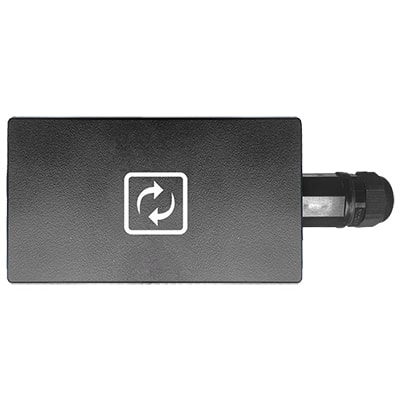
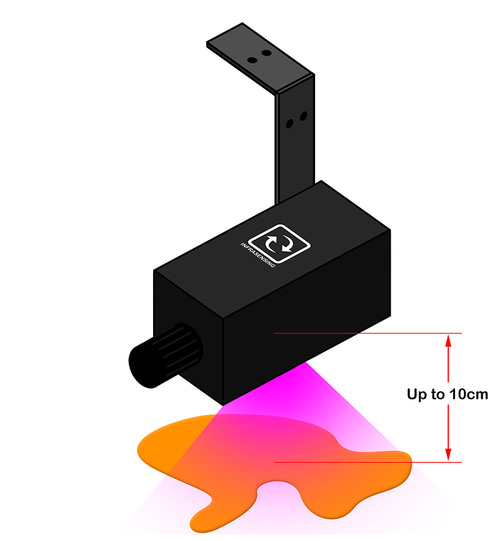
Placement quick reference — watch the surface from above:
Distance: up to 10cm / 3.9in above the surface
Surfaces: reflective & non-reflective
Output: WET / DRY status on the base unit
Contactless Optical Detection
Patent pending optics watch the surface from up to 10cm / 3.9in above it — on reflective and non-reflective surfaces alike.
Detection in Seconds
The fastest oil leak detection available: seconds from first film on the surface to an alert on your phone — not the next inspection round.
Reusable, Not Consumable
Sensing cables that touch oil are done. This sensor never touches the leak — clean up the spill and monitoring simply continues.
Where to Install
Generator rooms, day tanks, fuel lines, drip trays and bunds — wall, floor or ceiling mounted in an IP65 rated enclosure.
Alerting & Integration
WET/DRY status with immediate alerts via email, SNMP traps & optional SMS — straight into your BMS over Modbus TCP, BACnet IP or Modbus RTU.
How-To Video
A 78 second guided tour of the sensor: what it looks like, how it mounts above the surface and how a leak triggers the alert.
RS-485 Model
For OEMs and large accounts: a native RS-485 Modbus RTU version integrates directly with your own gateway or controllers — no base unit required.
Technical Specifications
Full detection, environmental, physical and connectivity specifications for the ENV-LEAK-OPTICAL-H.
Contactless Optical Detection
The world's first contactless oil leak detection sensor. Instead of waiting for oil to physically reach a sensing cable or probe, the patent pending optics continuously watch the surface below the sensor and recognize a hydrocarbon film the moment it appears.
- Non-intrusive: mounted up to 10cm / 3.9in above the monitored surface — nothing sits in the oil's path.
- Any surface: works on reflective and non-reflective surfaces — painted concrete, steel drip trays, coated bund floors.
- Calibratable: optionally calibrated to detect the covered surface area, not just presence.
- Simple output: a clear WET/DRY indication on the base unit — no interpretation needed.
RS485 (Modbus RTU) version

Looking to integrate this sensor with your own gateway or industrial control system? For large accounts customers or OEMs we now do offer a RS-485 version of this sensor. It has the same specs as the normal sensor. However rather than talking to our base unit and then communicate over industrial protocols with 3rd party systems, this version allows for native integration bypassing our base units.
It offers the same features as our regular sensors but with following differences:
- RS485 Modbus RTU output
- individually addressable using dial switch
- 256 addresses available
- 12-24v DC input
Contact us for pricing & more info
It offers the same features as our regular sensors but with following differences:
- RS485 Modbus RTU output
- individually addressable using dial switch
- 256 addresses available
- 12-24v DC input
Contact us for pricing & more info